
How to Build a Therapy Practice Website To Get More Clients
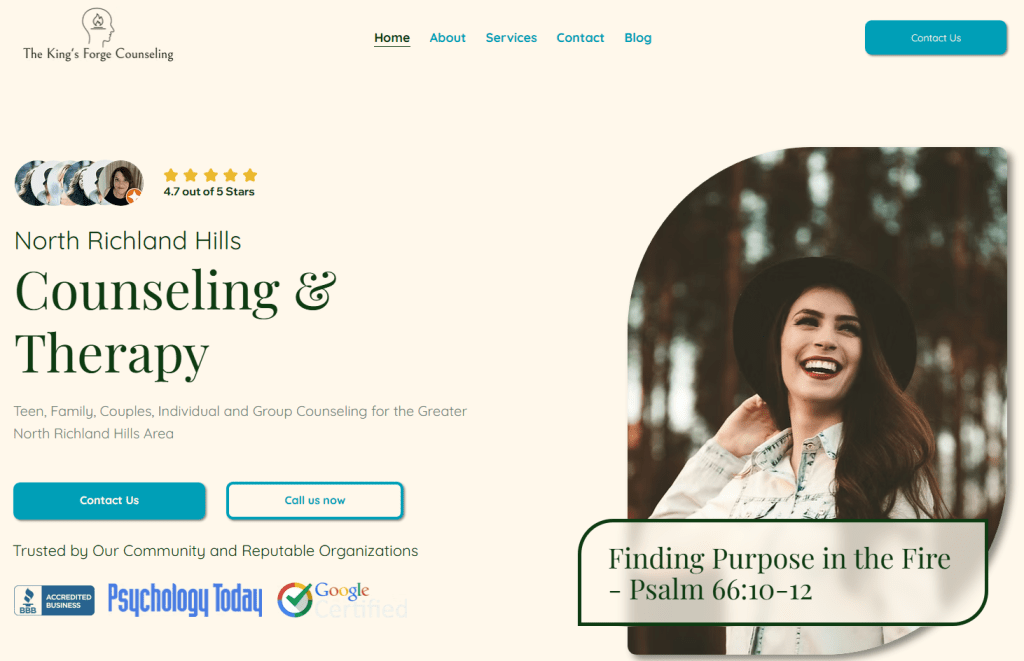
A therapy practice website is no longer a digital brochure. It is often the first point of emotional contact between a potential client and your practice. The structure, language, and usability of your site directly influence whether someone feels safe enough to reach out or leaves to keep searching.
The American Psychological Association notes that online platforms and digital tools have become an increasingly common entry point into mental health care, shaping how individuals learn about therapy options and evaluate providers before initiating contact. As technology plays a larger role in access to care, a practice’s website often serves as the first place potential clients form expectations about professionalism, approach, and fit.
This guide walks through how to build a therapy practice website that supports trust, clarity, and informed decision-making while following ethical and SEO best practices, and is also a part of a larger therapy digital marketing series that explores how websites fit into a complete strategy for visibility, trust, and long-term growth.
Table of Contents
Therapy Website Design Starts With Branding and Ideal Client Clarity
This section is both a guide and a checkpoint. If you already have a clear brand and clinical focus, use this as a way to pressure test whether your therapy website actually reflects it. If you are still early in the process, this is your reminder that effective therapy websites do not start with colors, layouts, or templates. They start with clarity around who you serve, what you help with, and why the right clients should feel understood the moment they land on your site. Without that foundation, even a well designed website will struggle to attract the right clients.
Define Who Your Therapy Website Is For
An effective therapy website starts by clearly defining who it is meant to serve. This does not require a narrow or exclusionary niche, but it does require intention. Age range, life stage, presenting concerns, location, and payment model all influence how potential clients interpret your site within seconds. Research from Google shows that users form a first impression of a website in as little as 50 milliseconds, and clarity plays a major role in whether they continue or leave. If your therapy website tries to speak to everyone, it often resonates with no one. Clear audience definition helps your site act as a filter, attracting clients who are a good fit while reducing low quality inquiries that drain time and energy.
Clarify the Problems You Help Clients With
People looking for therapy search in two primary ways: by the problems they are experiencing and by the types of therapy they have heard about. Someone might search for “help with anxiety” or “relationship counseling,” while another searches for “EMDR therapist near me” or “trauma therapy.” Research from Pew Research Center shows that adults seeking health information online commonly search for both symptoms and treatment options as part of the same decision process. A strong therapy website reflects both behaviors by clearly explaining the problems you help clients work through while also naming relevant modalities in a way that is accessible and ethical. This approach improves search visibility, supports informed decision making, and builds trust by meeting potential clients wherever they are in their search journey. It also prevents over reliance on clinical jargon while still demonstrating competence and specialization.
Decide What You Want Your Practice to Be Known For
Branding for a therapy practice is not simply about logos or color palettes. It is about perception — what someone thinks and feels about your practice in the seconds after landing on your site. Calm and grounded. Warm and reassuring. Practical and structured. These signals shape trust before contact ever happens. Research on first impressions shows that visual appeal and clear messaging massively influence perceived credibility in those first moments. For practices that already have branding, this step is about alignment: making sure your website actually expresses what your practice stands for. For those starting fresh, this step sets the foundation that content, design, and SEO decisions can build on. The result is a website that not only ranks better but also resonates with the right clients.
Overwhelmed By Having to Learn Marketing and Keep your Practice Operating? Let us Help
Core elements every therapy website must include
A Strong Hero (or above-the-fold) Section That Communicates What Your Practice Is, Who You Serve, and A Strong Call to Action
The hero, or above-the-fold section, is the most critical part of a therapy practice website because it shapes first impressions before a visitor scrolls or clicks. From a conversion standpoint, this section should align closely with the LIFT model by clearly communicating relevance, value, and trust while minimizing anxiety and distraction. Research from Nielsen Norman Group shows that users form an initial opinion about a website in under a second, relying heavily on visual hierarchy, headlines, and clarity to determine whether a page feels relevant to their needs.
For therapy websites, the hero section should immediately answer three questions: who the practice helps, what type of support is offered, and what the next low-pressure step is. This reduces uncertainty, which is a primary barrier for individuals seeking mental health care. Google research on page behavior also shows that users are significantly more likely to engage when a page clearly communicates its purpose without forcing them to hunt for meaning or next steps.
By anchoring the hero section around clear messaging, visible credibility cues, and a calm call to action, therapy practices can reduce hesitation and cognitive overload while allowing visitors to self-select whether the practice feels like a safe and appropriate fit.
A Clear and Human “About the Therapist” Section
The “About” section plays a critical role in building trust for therapy practices because people are not only choosing a service, they are choosing a person. While credentials and licensure matter, visitors are also seeking reassurance that the therapist feels approachable, competent, and aligned with their needs.
A strong About section balances professionalism with humanity. It should clearly state licensure, training, and experience while also explaining the therapist’s approach in plain language. Overly clinical bios can feel distant, while overly personal stories can undermine professionalism. The goal is clarity and relatability, not persuasion.
From an SEO and EEAT perspective, the About section also supports credibility signals. Clearly naming qualifications, areas of focus, and professional affiliations helps reinforce expertise and trustworthiness in the eyes of both users and search engines.
Service or Specialty Pages That Match Client Search Intent
Service and specialty pages are one of the strongest opportunities for both SEO and conversion on a therapy website. These pages allow practices to align directly with how people search for help, often using combinations of concerns, therapy types, and location.
Rather than relying on a single generic “Services” page, effective therapy websites create focused pages for key specialties such as anxiety therapy, couples counseling, trauma-focused therapy, or teen counseling. This structure helps visitors quickly find information that feels relevant to their situation.
From a search perspective, dedicated service pages allow for clearer keyword targeting and reduce the risk of thin or duplicate content. Google’s guidance on helpful content emphasizes specificity and usefulness over broad generalizations.
For visitors, these pages also support self-selection. Clear descriptions of who a service is for, what it typically addresses, and what someone can expect help reduce uncertainty and improve the quality of inquiries.
A Clear, Ethical Call to Action That Respects Client Readiness
The contact or intake experience is one of the most sensitive moments on a therapy practice website. From a LIFT model perspective, the goal is not to create urgency, but to reduce anxiety, clarify next steps, and remove unnecessary friction. A strong call to action can do this ethically when it focuses on process and choice rather than promises or outcomes.
For therapists who are confident in their clinical skills, offering a clear next step is not unethical. In fact, unclear or overly passive calls to action can increase hesitation by leaving visitors unsure how to proceed. Clear language such as “request a consultation” or “reach out to see if we’re a good fit” helps visitors understand what will happen without implying guaranteed results or pressure to commit.
An effective intake experience also minimizes cognitive load by keeping forms simple, explaining response timelines, and reinforcing privacy boundaries. By reducing uncertainty and distraction while maintaining transparency, therapy practices can invite engagement in a way that supports autonomy and informed decision making rather than persuasion.
Trust and Credibility Indicators Throughout the Site
Trust signals should not be isolated to a single page. Instead, they should be integrated naturally throughout the website wherever decisions are being made. For therapy practices, credibility is established through transparency, not marketing language.
Effective trust indicators include visible licensure information, reviews from you Google Business Profile, professional affiliations, years of experience, high-quality portraits of you and your staff, and clear practice details such as location and contact information. These elements reassure visitors that the practice is legitimate and professionally grounded.
From an EEAT standpoint, distributing trust signals across relevant pages reinforces expertise and authoritativeness without feeling repetitive or self-promotional.
Simple, Predictable Website Navigation
Navigation plays a critical role in how easily visitors can orient themselves on a therapy website. For users who may already feel overwhelmed, complex or unconventional navigation can increase frustration and abandonment.
Best practice navigation prioritizes clarity over creativity. Menu labels should be straightforward and familiar, such as Services, About, and Contact. Keeping navigation shallow and predictable helps users quickly find what they are looking for without cognitive strain.
Good navigation is not just a design concern, it is a conversion and accessibility consideration that directly impacts engagement.
Analytics, Tracking, and Measurement for Therapy Practices
Google Analytics Setup and Configuration
Analytics should be configured intentionally from day one, not added as an afterthought once the site is live. Google Analytics allows therapy practices to understand how visitors actually interact with the website, which pages hold attention, where users disengage, and how different paths through the site perform. When analytics are set up properly, the data becomes a decision-making tool rather than a source of noise or misinterpretation.
Just as importantly, intentional setup makes it possible to clearly see which channels are producing meaningful traffic and real inquiries. This visibility allows practices to distinguish between activity and effectiveness, understand what is driving growth, and make informed decisions about where to focus time and marketing investment moving forward.
Tracking Meaningful Actions and Key Events
Page views alone do not measure success. Therapy websites should track meaningful actions such as contact form submissions, phone clicks, and appointment requests. These events provide insight into which pages and services are driving real inquiries rather than passive traffic.
HIPAA-Aware Tracking Considerations
Analytics must respect privacy boundaries. Therapy practices should avoid collecting personally identifiable health information through analytics tools. Tracking should focus on behavioral patterns and outcomes, not sensitive client data. Clear boundaries protect clients and reduce compliance risk. It’s always best to contact a lawyer here to avoid risk and compromising patient information.
Using Data to Improve Content and Conversions
Analytics are only useful if they lead to better decisions. Data should be used to identify which pages are performing well, which services are underperforming, and where visitors encounter friction or drop off in the process. These insights help distinguish between pages that attract attention and pages that actually support inquiries and engagement.
Over time, this clarity allows practices to refine messaging, adjust page structure, and allocate marketing effort more effectively. Instead of guessing what needs improvement, decisions are guided by observable behavior, helping practices invest in strategies that consistently produce meaningful results rather than surface-level activity.
We're Here to Help You Grow Your Practice.
Working With a Professional Agency vs Choosing a Website Template
When Working With an Agency Is the Better Choice
For many therapy practices, working with a specialized agency is the most efficient and least risky way to build a website that actually supports growth. An experienced agency brings structure, strategy, and perspective that is difficult to replicate internally, especially when balancing clinical responsibilities with business decisions.
Agencies that focus on therapy and mental health websites understand how ethics, trust, SEO, performance, and conversion fit together. Rather than assembling these pieces separately, a well-run agency integrates them from the start. Over time, this often saves practices from expensive rebuilds, technical issues, or marketing efforts that fail to gain traction.
We have worked with a wide range of therapy practices and have seen firsthand how a thoughtfully planned website can reduce friction for prospective clients, support ethical communication, and create a stronger foundation for long-term visibility. The value is not in design alone, but in aligning every part of the site with how people actually seek care. If you’d like to get started developing your website for your practice, book a free call with us and see if you think we’re a good fit for your practice. → Book with us
What a Specialized Therapy Marketing Agency Brings to the Process
A specialized agency contributes more than technical execution. It brings pattern recognition. After helping multiple therapy practices, an agency can anticipate common challenges, avoid known pitfalls, and apply proven structures that support trust and clarity.
This includes proper disclosure placement, intuitive navigation, SEO strategy aligned with real search behavior, and analytics configured to measure meaningful outcomes. Instead of guessing what will work, practices benefit from lessons learned across many similar projects. This experience allows decisions to be made with confidence rather than trial and error.
When a Website Template Can Still Be a Practical Option
Templates can still be a practical choice for therapists who want to move at their own pace or prefer a more hands-on role in building their website. A well-chosen template can provide a clean visual framework and a faster starting point, especially when paired with thoughtful content and careful customization.
The key is not whether a template is used, but how it is implemented. Templates work best when they are treated as a flexible foundation rather than a finished solution. With intentional structure, clear messaging, and attention to performance, a template-based site can still support a professional and ethical online presence.
Tradeoffs to Consider When Using Templates
While templates offer flexibility and accessibility, they come with tradeoffs that should be considered upfront. Many templates are designed for broad audiences and may require additional effort to align with therapy-specific needs such as disclosures, accessibility, and SEO structure.
Templates can also accumulate technical debt over time if features are added without a clear plan. Extra plugins, visual effects, or page builders can impact performance and make future changes more difficult. These issues are manageable, but they require awareness and discipline to avoid undermining the site’s effectiveness.
Choosing the Path That Supports Long-Term Growth
While templates offer flexibility and accessibility, they come with tradeoffs that should be considered upfront. Many templates are designed for broad audiences and may require additional effort to align with therapy-specific needs such as disclosures, accessibility, and SEO structure.
Templates can also accumulate technical debt over time if features are added without a clear plan. Extra plugins, visual effects, or page builders can impact performance and make future changes more difficult. These issues are manageable, but they require awareness and discipline to avoid undermining the site’s effectiveness.
SEO Fundamentals for Therapy Websites (Service + Area)
How Google Understands Therapy Websites
Search engines do not evaluate therapy websites the same way they evaluate ecommerce or SaaS sites. Google looks for clear signals that the site represents a legitimate practice, offers specific services, and serves real people in real locations. This means the site structure, page relationships, and content hierarchy matter just as much as keywords.
Strong SEO fundamentals start with making it easy for search engines to understand what the practice does, who it helps, and where those services are offered. When this context is clear, rankings become a byproduct of clarity rather than aggressive optimization.
Structuring Pages to Support Discoverability Without Keyword Stuffing
Therapy websites perform best when pages have a clear purpose and are not overloaded with competing topics. Each major page should answer one primary question for both users and search engines. When pages try to rank for too many unrelated terms, relevance weakens and performance suffers.
A clean structure allows Google to confidently match pages to searches while also making the site easier for visitors to navigate. This balance improves both visibility and usability without relying on unnatural keyword repetition.
Internal Structure That Helps Search Engines and Users Navigate
Internal linking is not just about SEO authority. It helps define how different parts of the website relate to each other. When pages are connected intentionally, search engines better understand which pages are foundational and which are supportive.
For users, good internal structure reduces friction. Visitors can easily move from general information to more specific content without feeling lost or overwhelmed. This improves engagement and supports long-term performance.
Website Performance, Speed, and Technical Stability
Why Performance Matters Beyond Rankings
Research aggregations (including Google’s own benchmarks often cited in SEO analyses) show that as page load time increases from 1 second to 3 seconds, the probability that a visitor will leave (bounce) increases by about 32 percent, and as load time goes up to 5 seconds, the probability of bounce increases by about 90 percent. These figures are repeatedly reported in performance studies referencing Google’s data.
Performance also impacts conversions, not just traffic. Faster sites reduce friction and make it easier for users to complete actions, whether that is filling out a form, making a call, or navigating deeper into the site. Google explicitly incorporates performance metrics like Core Web Vitals into its ranking systems because they correlate with real user experience.
Beyond metrics, speed and stability shape perceived professionalism. A site that loads quickly and behaves predictably signals operational competence. Visitors rarely notice great performance, but they immediately notice poor performance, and they attribute that friction to the business itself.
Avoiding Technical Debt as the Site Grows
Technical debt is one of the most common reasons websites become slow, fragile, or expensive to maintain over time. It accumulates when features are added without considering long-term impact, such as excessive plugins, redundant scripts, or heavy page builders layered on top of each other.
Data from HTTP Archive shows that the average website continues to grow heavier year over year, largely due to increased JavaScript and third-party code. More code means more opportunities for conflicts, slower load times, and harder debugging when something breaks.
The cost of technical debt is rarely immediate, which is why it is often ignored early on. It shows up later as sluggish performance, security vulnerabilities, failed updates, or the need for a full rebuild sooner than expected. Sites built with restraint and clear structure are easier to maintain, easier to optimize, and more resilient as requirements change.
Avoiding technical debt does not mean limiting functionality. It means making intentional decisions, auditing what is actually used, and removing what no longer serves a clear purpose.
Remember That Social Media Success Is Not Overnight
Mobile traffic now accounts for the majority of web usage globally, and for many service-based websites it represents the primary entry point. Statista reports that mobile devices consistently generate over 55 percent of global website traffic.
Google now evaluates websites using mobile-first indexing, which means the mobile version of a site is treated as the primary version for indexing and ranking. If a website performs poorly on mobile devices, those issues can directly affect search visibility regardless of how well the desktop version performs.
Mobile performance goes beyond raw speed. Layout shifts, delayed interactions, and hard-to-tap elements degrade usability even when pages technically load quickly. These issues increase frustration and reduce engagement, particularly for users navigating on slower connections or smaller screens.
Designing with mobile as the primary experience forces clarity and discipline. When content hierarchy, navigation, and performance work well on mobile, desktop performance almost always benefits as a result. This aligns with how users browse today and how Google measures real-world experience.